
Each step in your regime
-
 The Happy SparrowThe Happy Sparrow Konjac Sponge Pink Clay100% natural konjac sponge with pink clay. No wasteful packaging. Naked and ready to use.View product detailsSpecial Price $1.95 Regular Price $9.95Save 80%
-
 The Happy SparrowThe Happy Sparrow Konjac Sponge Green Clay100% natural konjac sponge with green clay. No wasteful packaging. Naked and ready to use.View product detailsSpecial Price $1.95 Regular Price $9.95Save 80%
-
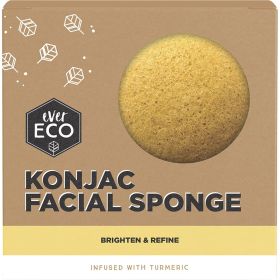 Ever EcoEver Eco Konjac Facial Sponge TurmericGently cleanse and exfoliate your way to seriously smooth skin with 100% natural konjac infused with turmeric to brighten and refine.View product details$9.95
-
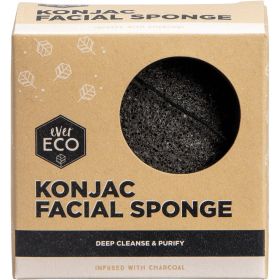 Ever EcoEver Eco Konjac Facial Sponge CharcoalMade from natural konjac root (a vegetable that grows in Asia)View product details$9.95
-
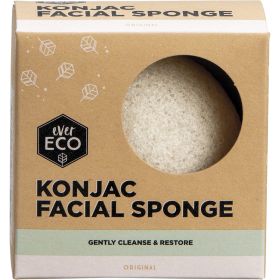 Ever EcoEver Eco Konjac Facial Sponge OriginalGently cleanse and exfoliate your way to seriously smooth skin with 100% natural konjac.View product details$9.95
Compare Konjac Sponge Types
Added ingredients and different shapes can make sponges look quite distinct, but their basic role remains similar. This table focuses on what each variation means when choosing, without assigning skincare results based only on colour or a featured ingredient.
| Sponge type | Main characteristic | Why you might choose it |
|---|---|---|
| Plain konjac sponge | Konjac-based sponge without a featured charcoal, clay or botanical addition | A straightforward option if you prefer a simpler composition |
| Charcoal konjac sponge | Contains added charcoal | Suits a preference for this formulation, without implying detoxifying or acne-treatment benefits |
| Clay or botanical variety | Features an added clay, extract or other plant-derived ingredient | Allows you to choose according to composition and ingredient preferences |
| Different shapes and sizes | May be round, oval, tapered or another contour | Choose according to grip, control and how you prefer to move around facial contours |
Konjac Sponge vs Face Cloth vs Facial Scrub
These products have different roles, and none is universally necessary. The most suitable format depends on the texture you enjoy, the products you want to remove and how much exfoliation is already in your routine.
| Feature | Konjac sponge | Face cloth | Facial scrub |
|---|---|---|---|
| Format | Water-activated cleansing accessory | Fabric cleansing accessory | Skincare formulation |
| Texture | Soft and pliable when fully soaked | Varies with the fabric and weave | Varies with the complete formula |
| Primary role | Physical cleansing and light exfoliation | Removing cleanser and other products | Product-specific exfoliation |
| Care | Rinse, gently press out water and air-dry | Launder regularly | Store and use as directed |
Can a konjac sponge replace a facial scrub?
Not necessarily. A sponge provides mild physical exfoliation through surface contact, while facial scrubs differ in texture and formulation. You may decide that one exfoliating step is enough for your routine, particularly if your skin is easily irritated.
Which option is easiest to care for?
A face cloth can be laundered, while a konjac sponge needs thorough rinsing, ventilation and periodic replacement. A facial scrub doesn't require accessory cleaning, but it has its own directions for use and storage.
Konjac Sponges FAQ
What is a konjac sponge made from?
A konjac sponge is made using fibres derived from the konjac plant. Some products use a primarily konjac-based composition, while others include charcoal, clay, botanical ingredients or additional materials. These additions distinguish the formulas but don't, on their own, guarantee particular skincare results.
How do you use a konjac sponge on your face?
Soak the sponge in clean water until it is completely soft and pliable. Gently move it over the face with light pressure, using water alone or a compatible facial cleanser according to the product directions. Rinse it thoroughly after use, press out excess water without wringing and allow it to air-dry.
Do you need to use cleanser with a konjac sponge?
Not always. Some konjac sponges can be used with water alone, while others may be used alongside a suitable face cleanser. Water alone may not remove all sunscreen, makeup or heavier cosmetic products, so your usual cleanser may still have an important place in the routine.
Is a konjac sponge suitable for sensitive skin?
It can suit some people who enjoy a soft cleansing texture, but suitability varies. Even when fully hydrated, the sponge creates physical contact and friction. Use very light pressure, start slowly and stop if your skin becomes uncomfortable. Avoid using it on broken or already irritated skin.
How often should you replace a konjac sponge?
There isn't one replacement interval that applies to every product or pattern of use. Follow the manufacturer's guidance and replace the sponge sooner if it develops an unusual smell, visible mould, significant deterioration or another sign that it is no longer suitable for facial use.
Expert Advice for Using Konjac Sponges
A little care makes a big difference to the feel and useful life of a konjac facial sponge. These practical habits are particularly helpful if you are switching from a face cloth or trying a water-activated sponge for the first time.
Never use the sponge while it is dry
A dry sponge can be firm enough to feel rough against the face. Soak it until the centre as well as the surface is completely soft and springy. As the sponge dries between uses it will harden again; this is normal, and it simply needs to be fully rehydrated before its next use.
Let the texture do the work
Glide the hydrated sponge over the skin with light, unhurried movements. Pressing harder or repeatedly scrubbing the same area increases friction rather than making the sponge more effective. This matters even more if you already use facial scrubs, exfoliating acids or other active skincare.
Match the cleansing method to what you are removing
Water alone may be enough when you want a light cleanse, depending on the product directions. Sunscreen, foundation and long-wearing eye makeup can require a suitable cleanser or dedicated remover. Rather than rubbing for longer, use the product that is appropriate for the makeup or skincare you need to remove.
Press rather than wring
After rinsing, place the sponge between your palms and press gently to release excess water. Aggressive twisting can damage its structure and shorten its useful life. If the sponge has a hanging cord, use it to suspend the sponge where air can move around it.
Give it somewhere ventilated to dry
A persistently damp shower corner or a dish containing standing water won't allow the sponge to dry well. Choose a clean, airy location instead. In humid weather, drying may take longer, so good ventilation becomes especially important. Follow any product-specific cleaning or storage directions rather than assuming every sponge tolerates heat or boiling water.
Keep one sponge per person
A facial sponge is a personal cleansing accessory and is best not shared. Replace yours in line with the manufacturer's guidance, or sooner if you notice mould, an unusual smell or substantial breakdown. If using the sponge causes ongoing redness, stinging or irritation, stop rather than increasing soaking time or changing your technique.


