
The best

-
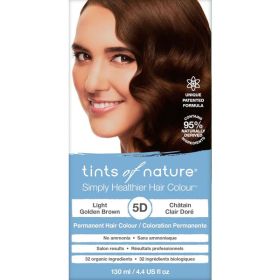 Tints Of NatureTints of Nature Permanent Hair Colour 5D Light Golden Brown100% grey coverage with 75% certified organic and 95% natural ingredients. Colour develops in just 40 mins.View product details$29.95
Compare Hair Colour Shades
The number in each shade code shows its depth, while the letters identify its tonal family. This quick comparison separates neutral, cool and warm shades so you can see why two colours at a similar depth may produce quite different results.
| Shade family | Example shades | Colour character | Why choose it? |
|---|---|---|---|
| Natural black and brown | 1N, 2N, 3N, 4N, 5N | Neutral-looking colour from black to light brown | Useful for maintaining classic colour and providing a foundation for grey coverage |
| Ash brown and blonde | 4C, 6C, 8C | Cooler and less golden or copper-looking | Suited to customers who prefer an understated, cool-toned finish |
| Golden brown and blonde | 5D, 7D | Warm golden tones | Adds warmth and brightness without moving into a strong copper tone |
| Chocolate and mahogany | 4CH, 4M | Rich chocolate warmth or a red-violet influence | Offers a more expressive brunette result than a neutral brown |
| Copper and red | 4RR, 5R, 7R | Deep red, auburn and copper tones | For noticeable warmth, from copper brown to lighter copper blonde |
| Toffee blonde | 6TF | Warm, caramel-like dark blonde | A warm alternative to ash or neutral dark blonde |
| Natural and light blonde | 6N, 7N, 8N, 10N, 10XL | Progressively lighter blonde depths | Choose according to your starting depth; significant lightening isn’t expected from a regular blonde shade |
What is the difference between natural and fashion shades?
Natural shades have an N code and create a more neutral colour foundation. Fashion shades introduce a particular tone, such as ash, gold, chocolate, mahogany or copper. For stronger grey coverage, selected fashion shades can be blended with the corresponding N shade at the same depth.
How do warm and cool shades compare?
A cool 6C Dark Ash Blonde is intended to look less golden, while warm colours at a similar depth introduce gold, caramel or copper tones. Neither is universally better; the useful question is whether you want to soften visible warmth or bring more of it into your finished colour.
Tints of Nature FAQs
What is Tints of Nature known for?
Tints of Nature is known for British-made, ammonia-free permanent hair colour that incorporates a high proportion of naturally derived and certified organic ingredients. Its shade system covers neutral, cool and warm tones, with choices ranging from black and brown through blonde, copper and red. The brand is also vegan and cruelty-free, and its parent company, Herb UK, is a Certified B Corporation.
Does Tints of Nature cover grey hair?
Yes, appropriate shades can provide up to 100% grey coverage. Natural shades 1N–8N are particularly relevant because they provide the neutral colour foundation needed for consistent coverage. If you prefer a fashion shade such as gold, copper or mahogany, the manufacturer may recommend blending it with the corresponding natural shade at the same depth. Results still depend on your starting colour, grey percentage and application.
What do the numbers and letters mean in Tints of Nature shades?
The number shows how dark or light the colour is, with lower numbers representing darker shades and higher numbers representing lighter ones. The letters indicate tone: N is natural, C is cool or ash, D is golden, CH is chocolate, M is mahogany, R is red or copper, RR is earth red, TF is toffee and XL is extra light.
Can you mix Tints of Nature permanent hair colours?
Yes, compatible permanent shades can be blended to customise depth, warmth and tone. Mixing a fashion colour with its matching natural shade can also support grey coverage. Keep the combined colour gel in the correct ratio with the total amount of Colourfix activator, using the manufacturer’s specified proportions. A strand test is especially worthwhile when creating a customised shade because it previews the blend on your own hair.
How is Tints of Nature different from henna hair dye?
Tints of Nature uses colour gel and an activator in a permanent oxidative process, giving it a defined shade system, relatively quick development and some limited lightening on suitable natural hair. Henna uses plant pigments that deposit colour, with results shaped strongly by the starting shade. Henna applications often take longer and may require two stages for certain darker results or stronger grey coverage.
Tips for Beautiful Home Hair Colour
A little preparation makes home colouring much easier, particularly when you’re changing shades or covering grey for the first time.
Start with your current colour
Identify your natural depth before deciding on tone. Someone with medium brown hair may start with 4N Natural Medium Brown for a familiar neutral result, or consider 4C, 4CH or 4M to keep a similar depth while changing the undertone. Previously coloured lengths may respond differently from natural roots, which is why a strand test gives more useful guidance than the box image alone.
Separate depth from tone
Two shades can be equally light or dark while looking quite different. For example, 5N Natural Light Brown and 5D Natural Light Golden Brown share a similar depth, but 5D introduces warmer golden tones. If your priority is reducing the appearance of gold or copper, look towards an ash code. If you enjoy warmth, golden, toffee and copper families offer progressively richer interpretations.
Prepare for even application
Complete the 48-hour skin sensitivity test before every colour application and perform a strand test to preview the result. When it’s time to colour, divide the hair into manageable sections before mixing the gel and activator. This makes it easier to distribute the freshly mixed colour methodically, particularly around the hairline and areas with more grey. Use the included pre-colour shampoo as directed rather than automatically substituting a separate natural clarifying shampoo.
Look after coloured hair
Permanent colour remains in the treated lengths, but new hair growth will gradually reveal your natural shade and may need root maintenance. Between applications, use a natural shampoo and conditioner suited to colour-treated hair, and avoid washing more often than your hair needs. Concentrating shampoo at the scalp and conditioner through the lengths can cleanse new growth while giving drier coloured sections more conditioning care.
Keep your grey-coverage plan consistent
If an N shade or a measured blend of natural and fashion colour gives you the coverage and tone you like, make a note of the shade codes and proportions used. Repeating a successful formula is far easier than trying to recreate it from memory when the roots are ready for their next application.


