
-
 Salt Of The EarthSalt Of The Earth Celtic Sea Salt Fine 650gThe low temperature dried coarse gains are stone milled to a light fluffy consistency while remaining unwashed and unrefined. Easiest version to use for cooking.View product details$13.95
-
 Salt Of The EarthSalt Of The Earth Ceramic GrinderCeramic mill grinder suits salt, pepper and spices for a superior fresh grind. Metal & nylon free mechanism.View product detailsSpecial Price $33.25 Regular Price $35.00Save 5%
-
 Salt Of The EarthSalt Of The Earth Celtic Sea Salt Ultra Fine 650gUltra fine Celtic Sea Salt with a powder like consistency to dissolve in water instantly.View product details$12.95
-
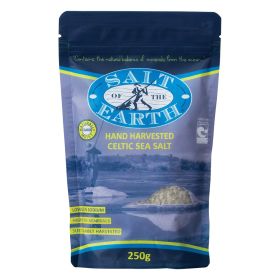 Salt Of The EarthSalt Of The Earth Celtic Sea Salt Coarse 250gSun dried medium sized moist crystals, unwashed, manual harvest with no mechanical manipulation.View product details$7.50
-
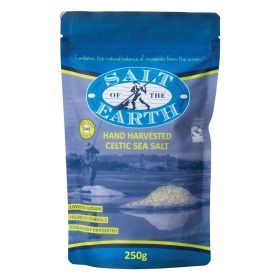 Salt Of The EarthSalt Of The Earth Celtic Sea Salt Low Temp Dried Coarse 250gThe coarse moist crystals are taken and dried at a low temperature for convenience while still maintaining the natural mineral balance.View product details$8.25
-
 Salt Of The EarthSalt Of The Earth Celtic Sea Salt Coarse 650gSun dried medium sized moist crystals, unwashed, manual harvest with no mechanical manipulation.View product details$11.00
-
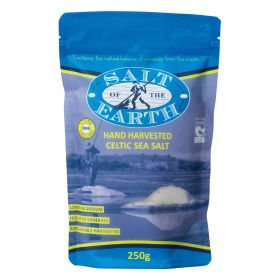 Salt Of The EarthSalt Of The Earth Celtic Sea Salt Fine 250gThe low temperature dried coarse gains are stone milled to a light fluffy consistency while remaining unwashed and unrefined. Easiest version to use for cooking.View product detailsSpecial Price $6.25 Regular Price $8.25Save 24%
Which Salt Of The Earth Celtic Sea Salt Should You Choose?
The collection starts with the same traditionally harvested French Celtic sea salt, then offers different moisture levels and grain sizes. This quick comparison shows which texture is likely to work most naturally with the way you cook.
| Salt variety | Texture | Best for | Available size |
|---|---|---|---|
| Coarse | Naturally moist, medium-sized crystals | Traditional Celtic sea salt, cooking and seasoning by hand | 250g and 650g |
| Low Temperature Dried Coarse | Dry, coarse crystals | Grinders and cooks who prefer a dry, free-flowing salt | 250g |
| Fine | Light, fluffy and finely milled | Everyday cooking, baking and even seasoning | 250g and 650g |
| Ultra Fine | Very fine, powder-like texture | Quick dissolving and recipes needing a very fine salt | 650g |
The main choice is between the natural moisture and tactile crystals of traditional coarse salt, the grinder-friendly handling of dried coarse salt and the convenience of a pre-milled texture. No single grade is best for every kitchen.
Which salt is easiest to use in a grinder?
Low Temperature Dried Coarse Celtic Sea Salt is the most practical choice because its dry crystals move through a grinder more readily. Traditional coarse salt can also be ground, but its naturally damp crystals may need drying first.
Should I choose fine or ultra-fine salt?
Fine salt offers a light, fluffy grain suited to most cooking, seasoning and baking. Ultra-fine salt has a more powder-like consistency and is useful when you want the salt to disperse or dissolve quickly in a liquid recipe.
Which pack size suits regular cooking?
The 650g coarse and fine packs provide more salt for frequent use, while their 250g counterparts take up less pantry space and offer a convenient starting size. Ultra Fine is available in 650g, while the dried coarse variety comes in 250g.
Frequently Asked Questions About Salt Of The Earth Celtic Sea Salt
Where does Salt Of The Earth Celtic Sea Salt come from?
The salt is traditionally hand harvested from coastal salt pans in France. It is not harvested in Australia. After importation, the dried salt used for the fine variety is stone milled in Australia to create its light, fluffy consistency.
Why is coarse Celtic sea salt grey and damp?
The grey colour and natural moisture come from the traditional salt-pan harvesting process, including the salt’s contact with the clay of the pans. Dampness is expected in the traditional coarse variety. The low-temperature-dried coarse, fine and ultra-fine products have different handling properties because more moisture has been removed.
Can you put Celtic sea salt in a grinder?
Yes, but dry coarse salt is generally easier to grind. Salt Of The Earth Low Temperature Dried Coarse Celtic Sea Salt is made for customers who prefer dry crystals and is a practical match for the brand’s ceramic grinder. Naturally moist coarse crystals may need drying before grinding.
Does Celtic sea salt contain minerals, and is it healthier than table salt?
Celtic sea salt contains naturally occurring trace minerals that may include magnesium, calcium and potassium, but it is still predominantly sodium chloride. It should not be considered a low-sodium salt or a significant source of other minerals, and its unrefined character does not make it universally healthier than table salt.
What is the difference between coarse and fine Celtic sea salt?
Coarse Celtic sea salt has larger, naturally moist crystals suited to pinching, cooking and finishing food. Fine Celtic sea salt is low-temperature dried and stone milled in Australia, giving it a lighter texture that is easy to sprinkle, mix through recipes and measure for baking.
Our Advice for Choosing Salt Of The Earth Celtic Sea Salt
Once you have your preferred texture in the kitchen, a few small habits can make it easier to measure, grind and store.
Match the Texture to the Stage of Cooking
Fine salt disperses readily through doughs, batters and mixed dishes, while coarse crystals are easy to pick up by hand when seasoning a pot or adding a finishing touch. Ultra-fine salt comes into its own when you want quick, even dissolving in sauces or dressings.
Don’t Worry If Your Coarse Salt Feels Damp
Traditional coarse Celtic sea salt is meant to retain natural moisture. It may feel different from free-flowing table salt and can form soft clumps in the container. These can usually be broken apart with clean, dry fingers or a small utensil before use.
Give Moist Salt Time to Dry Before Grinding
If you want to use traditional coarse crystals in a grinder, spread a small amount out to dry rather than filling the grinder straight from the moist pack. Drier crystals feed through grinding mechanisms more consistently. For frequent grinding, the low-temperature-dried coarse salt saves this extra step.
Season in Stages
Adding a little salt during cooking gives it time to disperse through the food. Taste again near the end before adding more. Coarse finishing crystals behave differently from fine salt because they dissolve more slowly and can create concentrated bursts of saltiness on the surface.
Allow for Different Grain Sizes in Recipes
Fine and coarse salt do not pack into a teaspoon in the same way. If a recipe was written for a different grain, a direct volume swap can change the amount of salt added. Measuring by weight is more reliable when precision matters, particularly in baking or larger batches.
Store Each Texture Appropriately
A salt cellar makes moist coarse salt easy to pinch while accommodating its natural texture. Keep dried coarse, fine and ultra-fine salt in well-sealed containers so they remain free-flowing, and avoid dipping in wet measuring spoons. All edible salts contribute sodium, so customers following medically directed sodium limits should use the guidance provided by their health professional.


