
-
 Australia's ManukaAustralia's Manuka Bioactive Honey MGO550+ 500gDigestive health, skin care, wound care, coughs & colds. (Cannot supply to WA).View product detailsSpecial Price $99.95 Regular Price $124.95Save 20%
 -
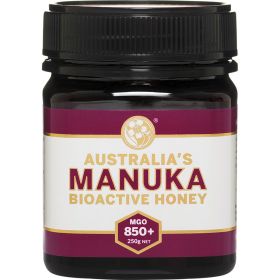 Australia's ManukaAustralia's Manuka Bioactive Honey MGO850+ 250gHigh MGO Strength. Skin Repair, Oral Care, Digestive Health, Wound Care, Sore Throats, Sunburn. (Cannot supply to WA).View product detailsSpecial Price $91.95 Regular Price $114.95Save 20%
 -
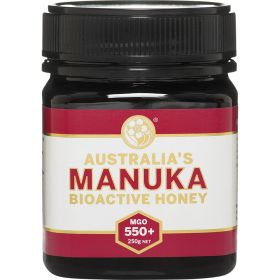 Australia's ManukaAustralia's Manuka Bioactive Honey MGO550+ 250gDigestive health, skin care, wound care, coughs & colds. (Cannot supply to WA).View product detailsSpecial Price $61.95 Regular Price $72.95Save 15%
 -
 Australia's ManukaAustralia's Manuka Bioactive Honey MGO250+ 250gMinimal strength for medicinal use. Skin & wound care. Superfood for smoothies. (Cannot supply to WA).View product detailsSpecial Price $39.95 Regular Price $44.95Save 11%
 -
 Australia's ManukaAustralia's Manuka Bioactive Honey MGO400+ 250gMedium strength MGO, use for acne, face masks, medical use and eating. (Cannot supply to WA).View product detailsSpecial Price $44.95 Regular Price $49.95Save 10%
 -
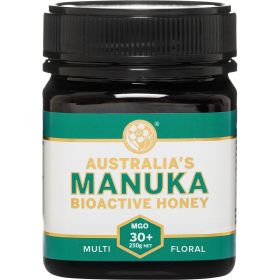 Australia's ManukaAustralia's Manuka Bioactive Honey MGO30+ 250gA healthy every day treat with a light MGO strength. (Cannot ship to WA).View product details$23.95
 -
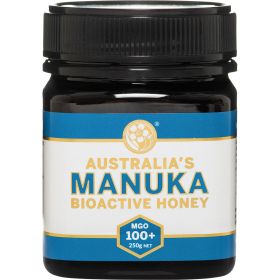 Australia's ManukaAustralia's Manuka Bioactive Honey MGO100+ 250gMild MGO strength - use daily for health maintenance dose. (Cannot ship to WA).View product details$29.95
Australia's Manuka Honey Comparison
The three Australia's Manuka products stocked by Shop Naturally come in the same 250g format, so you can compare them primarily by MGO rating. Begin by deciding whether you want an accessible honey for regular culinary use, a middle concentration or the highest measured MGO level in the range. This is more useful than simply treating the largest number as the default choice.
Frequency of use matters as well. A regularly used breakfast or pantry honey may disappear quickly, making MGO 100+ the practical option. MGO 300+ provides a step up in measured concentration without reaching the top of the range. MGO 550+ is intended for shoppers deliberately seeking a high-MGO food honey and may be better reserved for smaller or less frequent servings.
| Product | MGO rating | Size | Key difference | Useful for |
|---|---|---|---|---|
| Australia's Manuka Bioactive Manuka Honey MGO 100+ | MGO 100+ | 250g | Lowest measured MGO concentration in the range | Frequent culinary use and first-time manuka honey buyers |
| Australia's Manuka Bioactive Manuka Honey MGO 300+ | MGO 300+ | 250g | Middle measured MGO concentration | Shoppers wanting a balance between concentration and regular use |
| Australia's Manuka Bioactive Manuka Honey MGO 550+ | MGO 550+ | 250g | Highest measured MGO concentration in the range | Customers specifically seeking a high-MGO food honey |
Because every option is a 250g jar, compare value in the context of MGO concentration and expected use. The higher-rated jar is not automatically the most suitable: the best choice is the level you genuinely want at a price and usage frequency that work for your household.
Frequently Asked Questions
Is Australia's Manuka honey really Australian?
Yes. The brand grew from Tyagarah Apiaries in Northern NSW after manuka plants visited by the family's bees were identified during a bushwalk. Its honey comes from Australian Leptospermum species, sometimes known locally as Jellybush. New Zealand manuka is also associated with Leptospermum, but the countries have different native species and growing environments.
What does MGO mean in manuka honey?
MGO stands for methylglyoxal, a naturally occurring compound associated with manuka honey. The rating shows its measured concentration in milligrams per kilogram. MGO 300+, for example, indicates at least 300mg of methylglyoxal per kilogram of honey. It is a concentration measurement, not a serving recommendation.
Is a higher MGO number better?
A higher number means a higher measured MGO concentration, but it does not automatically make that jar the best purchase for everyone. MGO 100+ is practical for frequent food use, MGO 300+ is a middle option, and MGO 550+ suits customers specifically looking for the highest MGO concentration in this range.
How should I store manuka honey?
Keep manuka honey tightly closed in a cool, dry pantry away from direct sunlight, moisture and strong heat. Refrigeration is unnecessary and can make the honey firmer. Always use a clean, dry utensil so that water and food residue do not enter the jar. Natural crystallisation does not mean the honey has spoiled.
Can babies have manuka honey?
No. Manuka honey, like every other type of honey, must not be given to infants under 12 months because of the risk of infant botulism. This includes honey added to food, water or other drinks. For older children with dietary or health concerns, seek individual advice from an appropriate healthcare professional.
Expert Advice for Choosing and Using Manuka Honey
Choose the MGO level before comparing value
Decide which concentration you actually want before focusing on jar price. If you expect to use honey generously and often, MGO 100+ may be the most practical choice. MGO 300+ occupies the middle of the range, while MGO 550+ is for a deliberate high-MGO purchase. As the available jars are all 250g, comparing them by size alone will not help you decide.
Use a clean, dry utensil
Water, crumbs and food residue do not belong in the jar. Use a clean, completely dry spoon each time, close the lid firmly afterwards and avoid dipping a used utensil back into the honey. These simple habits are particularly helpful when one jar is opened repeatedly over an extended period.
Do not worry unnecessarily about crystallisation
Honey can naturally become grainy, cloudy or firm as its sugars form crystals. This is a normal physical change and does not by itself mean the honey is spoiled. If you prefer a runnier consistency, stand the closed jar in gently warm water and allow it to soften gradually. Avoid boiling water or intense direct heat.
Consider temperature when serving cold-extracted honey
Australia's Manuka is cold-extracted to limit unnecessary heat during processing. If that processing approach influenced your choice, let freshly boiled tea, porridge or other hot food cool slightly before adding the honey. There is no need for alarm around ordinary kitchen use; this is simply a practical way to avoid exposing cold-extracted honey to more heat than necessary.
Need help choosing?
Shop Naturally can help you compare the MGO 100+, 300+ and 550+ options according to your intended culinary use, preferred concentration and likely frequency of use.


