
-
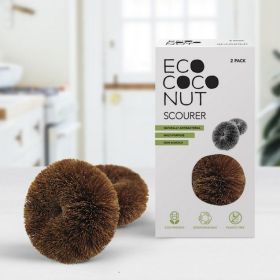 EcococonutEcococonut Scourer 2 PackA biodegradable and highly durable multipurpose scourer made from sustainably farmed coconut husks.View product detailsSpecial Price $6.95 Regular Price $9.95Save 30%
Compare EcoCoconut Cleaning Products
Each EcoCoconut format puts firm coconut fibre to work in a different way. This quick comparison focuses on shape, reach and grip so you can match the tool to the cleaning jobs you regularly tackle.
| Product | Shape | Useful for | Practical advantage |
|---|---|---|---|
| Kitchen cleaning brush | Brush head with a timber handle | Dishes, cookware and suitable general cleaning jobs | The handle keeps your hands away from the cleaning surface and provides reach around dishes and cookware. |
| Coconut scourer | Compact, hand-held scourer | Pots, pans, dishes and targeted scrubbing | Holding the scourer directly gives you close control around edges, curves and smaller areas. |
| Bottle brush | Long, narrow brush | Reusable bottles, jars, glasses and tall drinkware | The narrow profile reaches inside containers that a standard dish brush cannot easily access. |
| Scrub pad | Flat, hand-held pad | Suitable surfaces and broader scrubbing jobs | A wider contact area is useful when you want to scrub more of the surface with each pass. |
Should I choose a scourer or a scrub pad?
Choose a scourer when a compact shape and targeted control matter most, particularly around curves and smaller sections of cookware. A flatter scrub pad puts more material against a broad surface at once. Both are held directly in the hand, so the decision comes down to the area and shape you usually clean.
Is a bottle brush useful beyond water bottles?
Yes. Its long, narrow form can also suit jars, glasses, reusable cups and other containers that are difficult to reach with a standard brush. Particularly narrow necks vary in size, so make sure the opening can comfortably accommodate the brush rather than forcing it through.
Which format keeps my hands furthest from the surface?
The handled kitchen brush and long bottle brush provide the greatest separation. A scourer or scrub pad gives more direct control but places your hand closer to the surface and cleaning water. Neither approach is universally better; it depends on the grip and reach you prefer.
EcoCoconut FAQ
What are EcoCoconut brushes made from?
EcoCoconut brush heads, scourers and pads use fibres made from sustainably farmed coconut husks. Where a product has a timber handle, EcoCoconut uses FSC-certified timber from recycled rubber trees. Construction varies with the format, but coconut fibre is the central cleaning material across these products.
Are EcoCoconut products plastic free?
Yes. EcoCoconut currently states that its products and packaging are 100% plastic free. This makes the range relevant for customers who want to consider materials when replacing dish brushes, synthetic scourers and other commonly used cleaning tools.
Can EcoCoconut scourers be used on non-stick cookware?
That depends on the particular cookware and its care instructions. Coconut fibre provides firm physical scrubbing and should not be assumed to be scratch-free on every coating. Follow the cookware manufacturer's guidance and, if appropriate, test the scourer gently on an inconspicuous area first.
How long does an EcoCoconut brush last?
There is no single lifespan because wear depends on how often the brush is used, the pressure applied, the cleaning jobs it tackles and how well it dries between uses. Replace it when the fibres are too worn, damaged or spread out to work effectively rather than expecting it to remain visually pristine.
Do EcoCoconut brushes replace dishwashing liquid or household cleaner?
No. The coconut fibres provide physical scrubbing action, while an appropriate dishwashing liquid or household cleaner performs its own role in the cleaning process. Pair the tool with a product intended for the item or surface and use both according to their directions.
Expert Advice for Using EcoCoconut Cleaning Products
A few simple habits can keep coconut-fibre cleaning tools pleasant to use and help the fibres remain effective. The main differences from synthetic tools are how the natural fibres wear and the importance of letting them dry properly.
Let Coconut Fibre Dry Between Uses
Rinse food, detergent and cleaning residue from the fibres after use, then shake out excess water. Leave the brush, scourer or pad somewhere with good airflow so it can dry thoroughly. A wet coconut-fibre tool should not sit permanently at the bottom of the sink or in a container of water, where moisture remains trapped around the fibres.
Use Controlled Pressure
Coconut fibre is naturally firm, so it is usually more useful to work across residue with controlled, repeated passes than to press as hard as possible. Adjust the angle of a hand-held scourer around curves and edges, or let the broader face of a scrub pad make contact with flatter areas. This makes better use of each format's shape.
Test Delicate Surfaces First
Plant-derived does not automatically mean non-scratch. Before using coconut fibre on a delicate, polished, coated or non-stick surface, consider the manufacturer's care instructions. Where testing is appropriate, start gently on a small, inconspicuous area. This lets you assess the combination of the fibres, cleaning product and surface finish before tackling the whole item.
Expect Natural Fibres to Show Wear
A coconut-fibre brush will not necessarily continue looking new throughout its useful life. Fibres can spread, darken or show visible wear with regular cleaning. Appearance alone does not determine when replacement is needed; pay attention to whether the fibres remain secure and can still provide effective contact with the surface.
Pair the Tool with the Cleaning Job
Use the bottle brush where narrow reach matters, the handled brush when you want distance from the washing-up surface, and scourers or pads for close-control scrubbing. Matching the shape to the job reduces the temptation to force a brush into a space or use a small scourer across an unnecessarily large area.


