
BioTuff Compostable Bags & Bin Liners
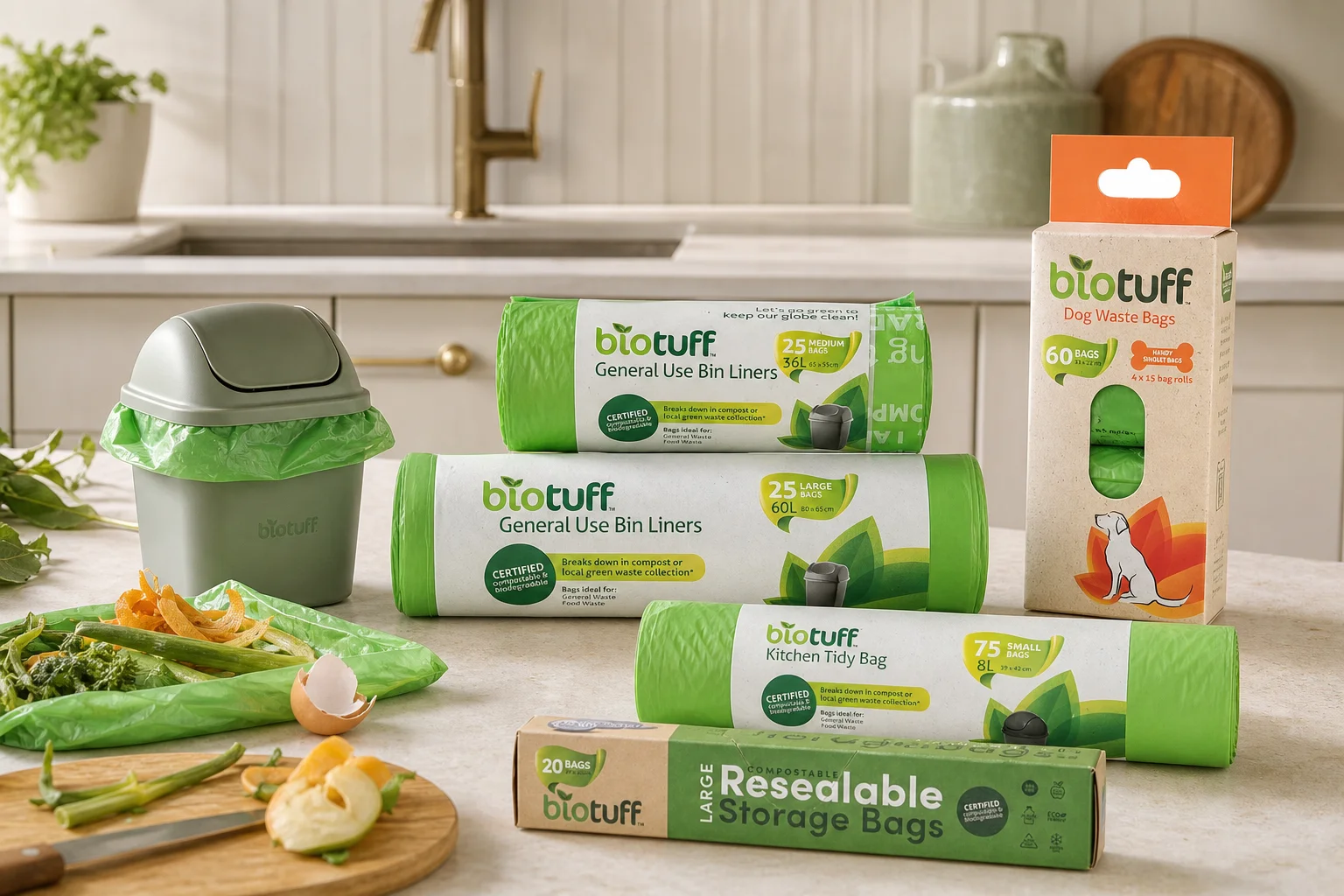
BioTuff Compostable Bags & Bin Liners
-
 Biotuff Resealable Large Storage Bags 27x30cm 20 packBiodegradable and Compostable Large zip lock sandwich bags, manufactured using renewable resources, plant base thermoplastic corn starch resin...IN STOCK 1-3 DAYS$14.95
 -
 BioTuff Compostable Garbage Bags 8 litres - 150 packPack of 150 small bin liners, 39 x 42cm. Certified compostable, made from Non-GMO Corn Starch.IN STOCK 1-3 DAYSSpecial Price $23.30 Regular Price $25.95
 -
 BioTuff Compostable Garbage Bags 8 litres - 75 packPack of 75 small bin liners, 39 x 42cm. Certified compostable, made from Non-GMO Corn Starch.IN STOCK 1-3 DAYS$14.95
 -
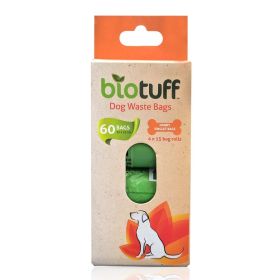 BioTuff Dog Waste Bags Refill 60 PackPack of 60 t-shirt style bags, 30 x 22cm. Certified compostable, made from Non-GMO Corn Starch.IN STOCK 1-3 DAYS$10.95
 -
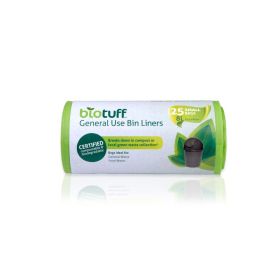 BioTuff Compostable Garbage Bags 8 litres - 25 packPack of 25 small bin liners, 39 x 42cm. Certified compostable, made from Non-GMO Corn Starch.IN STOCK 1-3 DAYS$5.95
 -
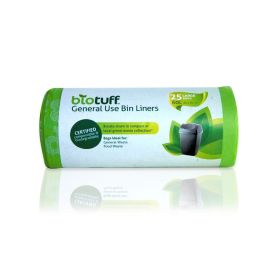 BioTuff Compostable Garbage Bags 60 litresPack of 25 large bin liners, 80 x 65cm. Certified compostable, made from Non-GMO Corn Starch.IN STOCK 1-3 DAYS$17.95
 -
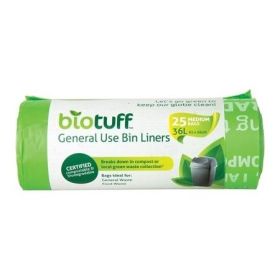 BioTuff Compostable Garbage Bags 36 litresPack of 25 medium bin liners, 65 x 56cm. Certified compostable, made from Non-GMO Corn Starch.IN STOCK 1-3 DAYS$17.19
 -
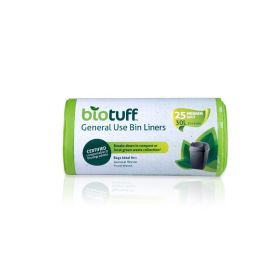 BioTuff Compostable Garbage Bags 30 litresPack of 25 medium bin liners, 57 x 51cm. Certified compostable, made from Non-GMO Corn Starch.IN STOCK 1-3 DAYS$10.95
 -
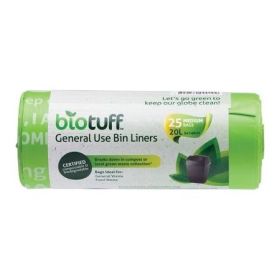 BioTuff Compostable Garbage Bags 20 litresPack of 25 medium bin liners, 54 x 46cm. Certified compostable, made from Non-GMO Corn Starch.OUT OF STOCK$10.95
 -
 BioTuff Compostable Freezer Bags Medium 4 litresPack of 25 medium freezer bags, 24 x 40cm. Certified compostable, made from Non-GMO Corn Starch.IN STOCK 1-3 DAYS$8.95
 -
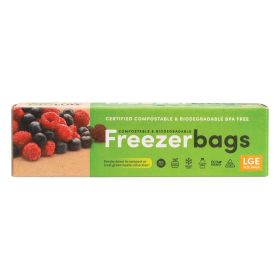 BioTuff Compostable Freezer Bags Large 6 litresPack of 25 large freezer bags, 24 x 50cm. Certified compostable, made from Non-GMO Corn Starch.IN STOCK 1-3 DAYS$8.95
BioTuff Bag Size & Type Comparison
Use this comparison to narrow the range by capacity and intended job. Where a bin is unusually tall, wide or tapered, compare its measurements with the individual bag dimensions before choosing.
| Bag type | Capacity or size | Pack format | Main use |
|---|---|---|---|
| Small bin liners | 8L | Multiple pack-size options | Bathroom, office and bench-top bins |
| Household bin liners | 20L, 30L and 36L | Pack quantity varies by stocked product | Kitchen and general household bins |
| Large garbage bags | 60L | Pack quantity shown with the stocked product | Larger household garbage bins |
| Dog waste bags | Purpose-sized bags | Pack quantity shown with the stocked product | Picking up and carrying dog waste |
| Freezer bags | 4L and 6L | Pack quantity shown with each size | Freezer and household food storage |
| Large resealable storage bags | Large zip-style format | Pack quantity shown with the stocked product | Closable household storage |
Product terminology also matters. “Biodegradable” broadly describes a material that can be broken down by biological processes over time, but it does not define the conditions or timeframe. “Compostable” means a material is designed to break down under specified composting conditions. Certified home-compostable and commercially compostable products are assessed for different environments: AS 5810 applies to home composting in Australia, while AS 4736 applies to industrial or commercial composting. These terms are not interchangeable with “recyclable”, “bioplastic” or “plastic free”. When comparing BioTuff bags, prioritise the intended use, verified capacity, dimensions, pack quantity and the composting environment covered by the product’s current certification.
Frequently Asked Questions About BioTuff
What does compostable mean?
Compostable materials are designed to break down under suitable composting conditions into material that can be incorporated into the composting process. Home and commercial compost systems provide different conditions, so certification matters. In Australia, AS 5810 relates to home compostability, while AS 4736 relates to industrial or commercial composting. “Compostable” should not be treated as simply another word for “biodegradable”; the certification and applicable composting environment need to match how the bag will be disposed of.
How long do BioTuff bags take to break down in home compost?
Around six months may be achievable under suitable home-composting conditions, but it is not a guaranteed timeframe for every bag or compost heap. Temperature, moisture, aeration, microbial activity and how regularly the compost is turned all affect decomposition. A cool, dry or poorly aerated heap can take considerably longer than an active, well-maintained compost system.
Will BioTuff bags break down in landfill?
Landfill is not a composting system. It may have limited oxygen, moisture and biological activity, so conditions can be poor for decomposition and outcomes are unpredictable. A compostable bag may eventually break down under some landfill conditions, but it should not be expected to compost as it would in a suitable home or commercial system. Sending compostable bags to landfill does not provide the same outcome as composting them correctly.
Can BioTuff compostable bags be put in your recycling?
No. Compostable bags do not belong in ordinary plastic recycling, even when they look and feel similar to conventional plastic bags. They are not processed through the standard plastic-recycling stream and may contaminate collected recycling. Some Australian councils accept particular certified compostable liners in FOGO or green-waste bins, while others prohibit all bags. Follow your local council’s current instructions rather than assuming acceptance.
What is the difference between biodegradable and compostable bags?
“Biodegradable” is a broad term describing the ability of a material to break down through biological activity over time. By itself, it does not state how quickly this will happen or which conditions are required. Certified compostability is more specific and relates to defined standards and composting conditions. Not every bag marketed as biodegradable is certified for home composting, commercial composting or council FOGO collection.
Expert Advice for Using Compostable Bags
Match the bag to the bin
Begin with the bin’s nominal capacity, then measure it if the shape is unusual. Check the opening as well as the height, because a liner that has enough volume can still be too narrow to fit over the rim. A little overhang helps hold the liner in place and gives you material for tying, but an excessively large bag uses more material than the job requires.
Store compostable bags carefully
Compostable materials are designed to respond to suitable heat, moisture and biological conditions, so storage can affect their performance. Keep unused BioTuff bags in a cool, dry place away from direct sunlight, excessive heat and moisture. Avoid leaving rolls in damp cupboards or hot vehicles for prolonged periods, and use older stock before newly purchased packs. Do not assume an indefinite shelf life.
Don’t put compostable bags in recycling
Keep compostable liners out of ordinary household recycling. If you use one to collect recyclable containers, empty the contents into the recycling bin and dispose of the liner through an accepted waste stream. Putting the entire filled bag into recycling can cause problems during sorting, regardless of whether the bag carries compostability certification.
Know where the bag will go after use
Think about disposal before choosing a bag. A home compost heap, a council FOGO service, a commercial composting facility and landfill are different environments. Check whether the specific bag is certified for the disposal option you intend to use. For FOGO or green-bin collection, follow your council’s rules because not every service accepts compostable liners.
Need help choosing? Shop Naturally can help you compare BioTuff garbage-bag capacities, freezer-bag sizes, resealable storage bags and dog waste bags for the job you have in mind.


